A detailed, balanced look at Nutrivea's 19-ingredient metabolic blend. We examine the formulation, dosing transparency, and realistic expectations so you can decide whether it fits your goals.
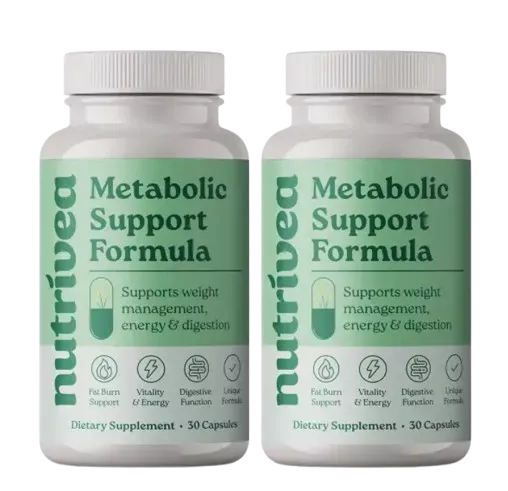
Key facts before diving into the detail
Why metabolic support supplements have grown in demand and what the science actually says about the underlying mechanisms they aim to address.
Persistent weight management challenges are rarely the result of a single factor. Research consistently points to a combination of hormonal regulation, dietary habits, metabolic rate, gut health, and lifestyle variables interacting simultaneously.
Appetite-regulating hormones such as leptin (satiety) and ghrelin (hunger) can become dysregulated over time, particularly in response to ultra-processed foods, sleep disruption, and chronic stress. Energy expenditure is also influenced by thermogenic activity, mitochondrial function, and physical movement — all of which decline with age or reduced activity.
Statistical references are for general context and do not represent clinical claims.
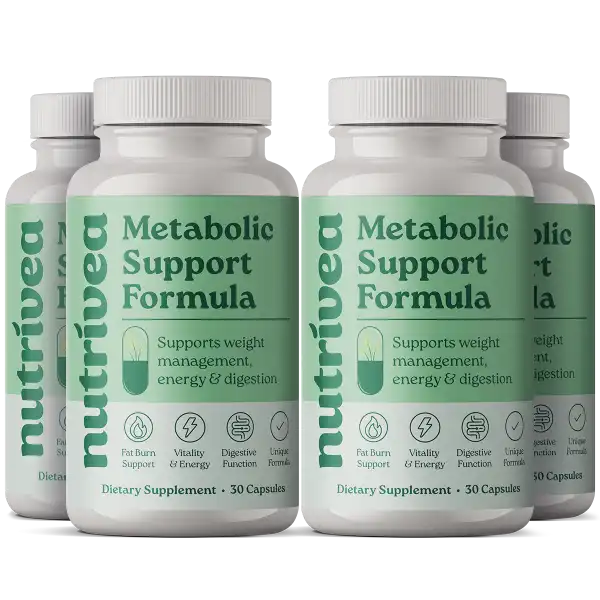
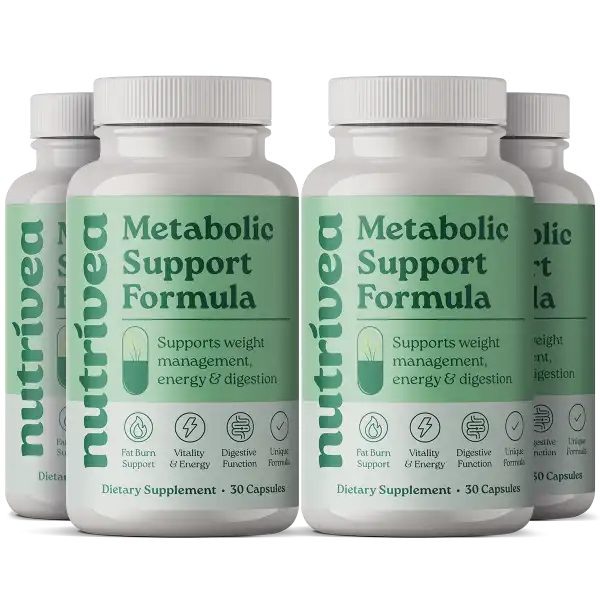
Nutrivea is a multi-ingredient food supplement formulated to complement a balanced diet and active lifestyle. It delivers 19 actives in a convenient 2-capsule daily serving, using a vegan hydroxypropylmethylcellulose (HPMC) capsule shell.
The formula spans several ingredient categories: polyphenol-rich botanical extracts (green tea, pine bark, turmeric, green coffee), thermogenic actives (citrus aurantium, capsaicin, caffeine), metabolic amino acids and fatty acids (L-carnitine, CLA), key micronutrients (magnesium, zinc, chromium), and gut-supportive fibre (nopal cactus). It also includes choline for normal lipid metabolism and birch leaf and rutin for circulatory support.
Importantly, Nutrivea is a food supplement — not a pharmaceutical. It is not intended to diagnose, treat, cure, or prevent any medical condition. Individual responses to supplementation vary based on diet, activity level, genetics, and consistency of use.
The formula targets three overlapping layers of metabolic function, though it is important to note that real-world effects depend significantly on diet, activity, and consistency.
Several ingredients in the formula have established associations with modest increases in resting energy expenditure and fat oxidation in clinical settings, primarily through sympathomimetic and mitochondrial pathways.
A subset of the formula's ingredients have been studied in relation to appetite signalling, gastric emptying, and satiety hormone pathways, with evidence ranging from preliminary to moderate.
The formula includes a polyphenol-rich layer designed to address oxidative stress, which has been linked to impaired metabolic efficiency and chronic inflammation.
Based on general supplementation research — not guaranteed individual outcomes. Results vary and depend heavily on diet, exercise, and consistency.
Most users report no dramatic change. Some notice a slight reduction in between-meal hunger or a modest uplift in daytime energy, likely attributable to the caffeine from green tea and the fibre content from nopal. Digestive adjustment is common as the body adapts to new plant fibre input. Setting realistic expectations here is important — supplements are not fast-acting drugs.
With consistent daily use alongside an improved diet, some users begin to notice more stable energy levels and reduced cravings between meals. The thermogenic layer (green tea, citrus aurantium, capsaicin) typically requires several weeks of consistent intake for cumulative effects on fat oxidation pathways to become measurable. Water retention changes may also contribute to perceptible differences in this phase.
This is where most credible user feedback begins to report noticeable changes in portion control, reduced snacking frequency, and improved body composition when paired with dietary discipline. The antioxidant and anti-inflammatory ingredients (turmeric, pine bark, rutin) may also support recovery and general wellbeing. Continued use for at least 60 to 90 days is recommended for a meaningful personal assessment. Stopping early may prevent any meaningful evaluation of efficacy.
Each ingredient evaluated individually for its role in the formula and the strength of supporting evidence.
One of the most researched thermogenic ingredients. EGCG combined with caffeine has demonstrated modest but reproducible increases in resting metabolic rate and fat oxidation in multiple randomised controlled trials. The dual-extract format here standardises both polyphenol and caffeine fractions separately, which is a positive formulation choice. Effect sizes in clinical studies are generally small (around 3 to 5% increase in resting energy expenditure) but statistically significant.
Chlorogenic acid inhibits glucose-6-phosphatase, potentially reducing postprandial glucose absorption and subsequent insulin spikes. Reduced insulin spikes may, over time, support less fat storage signalling. Evidence is moderate; some systematic reviews note modest body weight reductions in short-term trials, though effect sizes are often clinically modest. The 50% standardisation is appropriate for research-grade comparison.
Rich in soluble and insoluble dietary fibre. Soluble fibre forms a viscous gel in the gut, slowing gastric emptying, moderating postprandial glucose peaks, and supporting a sense of fullness. The quality of evidence for nopal specifically is limited compared to more studied fibres like psyllium, but early trials show promising satiety effects. Its inclusion is well-reasoned from a mechanistic standpoint.
Synephrine is a mild adrenergic amine that has largely replaced ephedra in thermogenic formulas. It stimulates beta-3 adrenergic receptors linked to lipolysis and thermogenesis. Evidence is mixed but modestly positive for resting metabolic rate. Persons with cardiovascular conditions or those on MAO inhibitors should consult a physician before use. The bioflavonoid fraction adds antioxidant and vascular support properties.
L-carnitine facilitates the transport of long-chain fatty acids across the mitochondrial membrane for beta-oxidation (energy generation from fat). The tartrate form is well-absorbed. Evidence supports L-carnitine's role in reducing exercise-induced muscle damage and modestly supporting fat utilisation during aerobic activity. Effects in sedentary individuals without dietary deficiency are generally smaller than in active users. The dose in this formula is not disclosed individually, which limits direct clinical comparison.
CLA is a polyunsaturated fatty acid with a body of research linking it to modest improvements in body composition — specifically lean mass preservation and modest reductions in fat mass — when used alongside resistance training. The evidence base is reasonable but effect sizes are modest. Doses used in most positive studies range from 3 to 6g/day; without individual dose disclosure here, it is difficult to assess whether the inclusion reaches meaningful levels.
Curcumin is one of the most extensively studied phytochemicals for anti-inflammatory and antioxidant effects. Its relevance to metabolic health lies in its ability to reduce chronic low-grade inflammation, which is increasingly linked to insulin resistance and metabolic syndrome. Bioavailability is a known challenge for curcumin, though the 95% standardised extract is a more concentrated form than raw turmeric powder.
Proanthocyanidins from pine bark (branded as Pycnogenol in some trials) have demonstrated antioxidant, anti-inflammatory, and endothelial support properties. In metabolic contexts, proanthocyanidins may support insulin signalling and vascular function. The 95% standardisation is high quality. Evidence is most robust for circulatory and antioxidant outcomes rather than direct fat loss.
Choline is an essential nutrient important for phosphatidylcholine synthesis, liver fat metabolism, and neurotransmitter production. It plays a structural role in preventing fatty liver accumulation. Its inclusion in a metabolic formula is nutritionally rational, particularly for populations with below-adequate dietary intake of choline (common in those not consuming eggs or organ meats regularly).
Birch leaf has traditional use as a mild diuretic and anti-inflammatory herb. It contains betulinic acid derivatives and flavonoids that may support fluid balance and reduce mild oedema. It is unlikely to contribute directly to fat loss but may support comfort and reduce water-retention-related puffiness in some individuals. The 5:1 extract ratio suggests meaningful concentration relative to raw herb.
Capsaicin activates TRPV1 receptors, generating heat and transiently increasing caloric expenditure. Meta-analyses suggest a modest thermogenic effect, with some evidence for reduced appetite post-ingestion. Importantly, the effect is transient and becomes partially attenuated with chronic use in some individuals. Still, its inclusion as part of a multi-pathway thermogenic stack is mechanistically sound.
Rutin is a flavonoid with antioxidant, anti-inflammatory, and venotropic properties. It strengthens capillary walls, reduces inflammation, and has demonstrated modest blood sugar modulating effects in some studies. Its presence in a metabolic formula adds to the antioxidant and vascular support layer. The 95% purity is pharmaceutical-grade.
⚠️ Transparency Note on Individual Dosing: While Nutrivea discloses all ingredient names and their standardisation levels, individual ingredient doses within the 2-capsule serving are not all individually quantified publicly. This limits a direct clinical dose comparison for several actives (particularly L-carnitine, CLA, and capsaicin). Proprietary blending — where totals rather than individual doses are disclosed — makes it difficult for consumers to assess whether key ingredients reach clinically meaningful thresholds. Where individual dose data is available, we note it in the dosage analysis table below. We encourage consumers to contact the manufacturer directly for full dose disclosure.
A comparison of key ingredients against commonly cited clinical dose ranges. This is intended for educational reference only.
| Ingredient | Standardisation | Dose Status | Commonly Studied Range | Notes |
|---|---|---|---|---|
| Green Tea Extract (EGCG) | 45% EGCG | Partial | 400–800mg EGCG/day | Total extract dose undisclosed; standardisation is appropriate |
| Green Tea Extract (Caffeine) | 30% Caffeine | Partial | 100–200mg caffeine/day for thermogenesis | Combined with citrus aurantium; caffeine load should be managed |
| Green Coffee Extract | 50% Chlorogenic Acid | Partial | 400–800mg/day extract | Good standardisation; individual dose not publicly disclosed |
| Citrus Aurantium (Synephrine) | 6% Synephrine | Partial | 10–50mg synephrine/day | Cardiovascular sensitivity flag; dose disclosure important |
| L-Carnitine Tartrate | Amino acid — no % | Undisclosed | 1,000–3,000mg/day | Most clinical benefit studies used doses above 1g; undisclosed here |
| CLA (Conjugated Linoleic Acid) | 80% CLA | Undisclosed | 3,000–6,000mg/day | Many studies used large doses; 2-capsule delivery makes therapeutic levels uncertain |
| Turmeric Extract | 95% Curcuminoids | Partial | 500–1,500mg curcumin/day | High standardisation positive; bioavailability enhancer absent |
| Pine Bark Extract | 95% Proanthocyanidins | Partial | 100–200mg/day (as Pycnogenol) | Lower reference dose; inclusion may be within range |
| Chromium(III) | Hexahydrate salt | Likely Aligned | 200–400mcg/day | Micronutrient doses are typically small and likely within capsule capacity |
| Magnesium (Carbonate + Oxide) | Dual salt form | Partial | 300–400mg elemental/day | Dual form may partially offset bioavailability limitations of oxide form |
| Zinc Bisglycinate | Chelated form | Likely Aligned | 10–25mg elemental zinc/day | Bisglycinate is a well-absorbed chelated form; appropriate inclusion |
Note: Dose comparisons are based on publicly available clinical literature references. They do not represent definitive efficacy thresholds or clinical guidance. Where individual doses are not publicly disclosed, this analysis marks them as "Undisclosed" and encourages direct manufacturer enquiry.
Based on ingredient function — not outcome guarantees. Individual results depend on diet, lifestyle, and consistent use.
Green tea, green coffee, citrus aurantium, and capsaicin combine to support resting thermogenesis through complementary pathways.
Nopal fibre and chromium target blood sugar regulation and satiety mechanisms to support more manageable hunger levels.
L-carnitine supports fatty acid transport for cellular energy, while magnesium and caffeine fractions support alertness and physical performance.
Pine bark (proanthocyanidins), turmeric (curcuminoids), rutin, and citrus bioflavonoids provide a multi-source polyphenol antioxidant layer.
Rutin, pine bark, and birch leaf collectively support vascular integrity and micro-circulation health as secondary benefits.
Magnesium, zinc, and chromium address common micronutrient gaps in modern diets that affect metabolic enzyme function and hormonal balance.
A selection of verified purchase feedback. Individual experiences vary and these represent personal observations, not guaranteed outcomes.

After just a few weeks on these capsules, I noticed I was not craving snacks between meals anymore. I feel satisfied longer, and my energy levels are steady throughout the day. Nothing dramatic — just consistent and manageable.

I have always had a big appetite, especially in the evenings. These capsules actually help me feel full faster and stay satisfied longer. No jitters, no weird aftertaste — just steady results. I am genuinely impressed with the consistency.

I was a bit sceptical about supplements, but this one feels different. It is gentle on my stomach and I have not experienced any jitters or crashes. My hunger levels are way more manageable and I do not feel like I am constantly thinking about food.
Individual user experiences are personal observations. Results are not guaranteed and vary based on diet, lifestyle, and individual physiology. These testimonials are shared for informational context only.
A neutral review must address common objections and criticisms. These are areas where consumer caution is warranted.
While ingredient names and standardisation percentages are disclosed, the individual milligram dose for several ingredients (notably L-carnitine and CLA) is not publicly listed. This makes it difficult to assess whether certain actives reach the doses used in relevant clinical studies. Consumers who want to perform their own due diligence may find this frustrating, and we consider it a legitimate transparency gap.
At the single-bottle retail price, Nutrivea is at the upper end of the supplement market. The multi-bottle discount brings per-unit cost down meaningfully, but ongoing cost is a realistic consideration. Supplements are a recurring expense and this should factor into a long-term budget assessment before committing.
The formula includes two green tea extracts standardised for caffeine, plus citrus aurantium synephrine. The cumulative stimulant load may cause jitteriness, disrupted sleep, or elevated heart rate in caffeine-sensitive individuals. Anyone with cardiovascular conditions, anxiety disorders, or sensitivity to stimulants should consult a physician before starting.
Supplement responses are highly individual. Some users in online forums report no perceptible change after a full month of use. This is expected in any supplement category — particularly for metabolic support products where diet and activity are the dominant variables. A supplement without accompanying lifestyle changes is unlikely to produce significant results for most users.
Nutrivea is not currently sold through third-party retailers such as Amazon, Walmart, or health stores. While this ensures product authenticity and guarantee eligibility, it limits access for some consumers and means there are no independent retailer reviews available for cross-comparison at this time.
A general comparison of key formulation and commercial factors. This is not a comprehensive clinical ranking — it is an informational reference.
| Feature | Nutrivea | Generic Multi-Herb | Single-Ingredient (e.g. GTE only) | Rx GLP-1 Agonist |
|---|---|---|---|---|
| Ingredient Count | 19 actives | 5–10 typically | 1 | 1 (synthetic) |
| Standardised Extracts | ✓ | Partial | ✓ | N/A |
| Vegan Capsule | ✓ | Varies | Varies | N/A (injection) |
| Multi-Pathway Formula | ✓ | Partial | ✗ | Single (GLP-1) |
| Full Individual Dose Disclosure | Partial | Varies | ✓ | ✓ |
| 60-Day Guarantee | ✓ | Varies | Varies | ✗ |
| Prescription Required | ✗ | ✗ | ✗ | ✓ |
| Side Effect Risk | Low to moderate (stimulant) | Low typically | Low | Moderate to high (nausea, GI) |
A direct summary of the formulation's notable strengths and genuine limitations.
Consistency is the primary driver of results with any nutritional supplement. Here is the recommended approach.
The recommended serving is 2 capsules per day. Taking them at a consistent time each day supports habit formation and steady-state nutrient levels.
Take with food to support absorption of fat-soluble ingredients (CLA, curcumin) and reduce any potential digestive sensitivity from capsaicin or green coffee.
The diuretic properties of birch leaf and fibre from nopal mean adequate water intake (at least 2 litres daily) is important to support comfort and healthy elimination.
Supplements do not replace diet and exercise. For best results, combine with a calorie-aware diet and regular physical activity. Track progress at 4-week intervals to assess personal response.
⚕️ Medication Interaction Warning: Nutrivea contains synephrine (citrus aurantium), caffeine fractions, chromium, and several botanicals with potential pharmacological activity. Individuals taking antidepressants (particularly MAOIs or SSRIs), blood thinners, thyroid medications, diabetes medications, or antihypertensive drugs should consult a qualified healthcare professional before using this supplement. Interactions between synephrine and certain medications carry cardiovascular risk. This warning does not constitute medical advice — please seek individual professional guidance.
All prices are as listed on the official website at time of writing. Pricing may vary due to promotions. Always purchase from the official website to ensure guarantee eligibility and product authenticity.
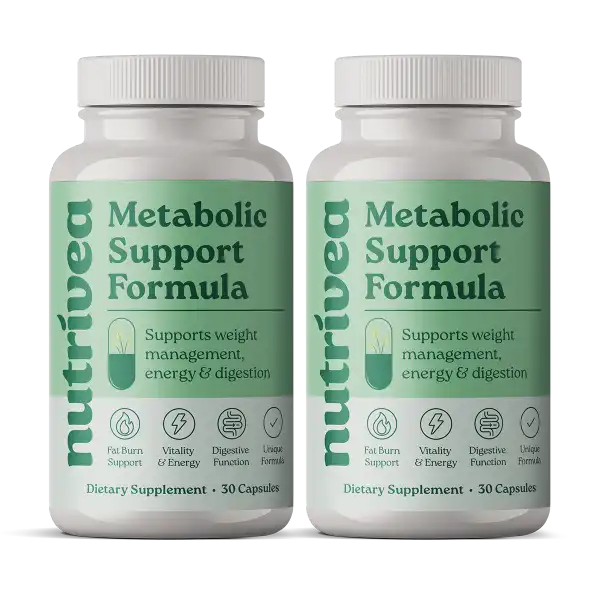
Purchase on account & instalment payments available
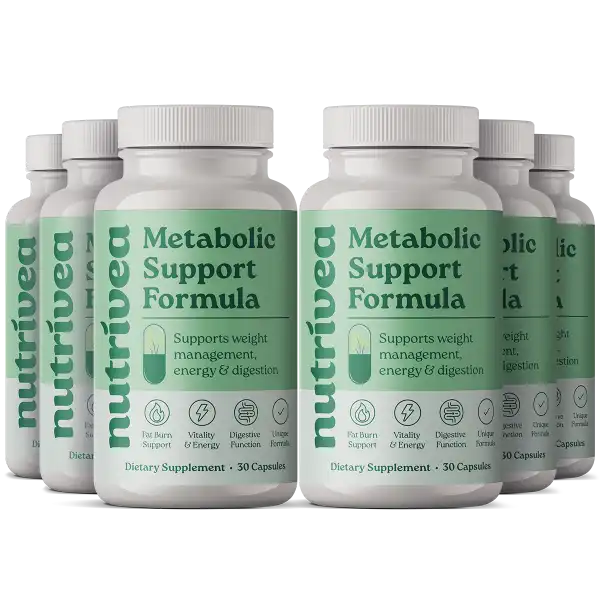
Purchase on account & instalment payments available
Purchase on account & instalment payments available

Nutrivea's manufacturer offers a 60-day satisfaction guarantee on purchases made through the official website. If you are not satisfied with your experience, you may request a refund within 60 days of purchase. We recommend reviewing the full terms and conditions on the official site before purchasing, as guarantee eligibility and processing terms may be subject to conditions. This guarantee reduces the financial risk of a trial period, which we consider a meaningful commitment from the manufacturer.
Nutrivea presents a genuinely broad and thoughtfully structured formulation. The inclusion of 19 standardised actives spanning thermogenics, polyphenol antioxidants, amino acids, fatty acids, fibre, and micronutrients reflects a multi-pathway approach that is consistent with modern nutritional science thinking on metabolic support.
Its key strengths are the quality of standardisation (high percentages for EGCG, curcuminoids, proanthocyanidins, and CLA), the vegan capsule, the accessible 2-capsule daily serving, and the 60-day guarantee. For consumers seeking a comprehensive daily supplement to support metabolic wellness alongside a balanced lifestyle, the formula's breadth is a genuine differentiator.
The notable limitation is incomplete individual dose disclosure for several key actives, which makes clinical dose benchmarking difficult. This is a legitimate transparency gap. Stimulant-sensitive individuals should also approach the caffeine and synephrine content carefully. And as with any food supplement, the absence of dietary discipline and physical activity significantly limits potential outcomes.
Overall, Nutrivea is a credible, well-formulated metabolic supplement with a sensible risk profile for most healthy adults — provided expectations are realistic, lifestyle foundations are in place, and any relevant medication interactions are checked with a healthcare professional first.